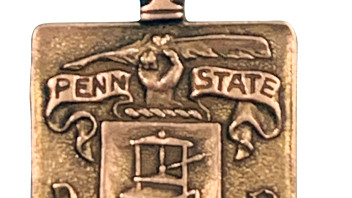
Thoughts on a proud past, a dynamic present, and a bright future for your Alumni Association.
by Paul Clifford, CEO of the Penn State Alumni Association
Some years ago, when I was going through customs in Montreal on the way to a conference, I saw some folks wearing Penn State gear and I yelled, “We are!” Now I’m the one wearing the Penn State gear and hearing other people yell it to me. And that’s really what the Alumni Association is about: People around the world sharing different stories through a unifying experience. That’s at the heart of what we’re celebrating as we mark the Alumni Association’s 150th anniversary this year.
I grew up in a Penn State family, so I always knew Penn State was a special place, but it wasn’t until I began working in higher education that I fully appreciated it. And it’s across the university as a whole: The Alumni Association has long been regarded nationally as best in class. There’s a reputation of quality, from the organization to the people who have led it, from Ridge Riley ’32 Lib to, most recently, Roger Williams ’73 Lib, ’75 MA Com, ’88 DEd Edu. (When I would go to those conferences earlier in my career, Roger was one of the people I would seek out.)
Since I came here in 2016, I’ve been struck by a number of things. More than anywhere else I’ve been involved with, the Alumni Association is positioned to have an impact on the university—whether it’s how we turn alumni support into philanthropy, or how we support every college and campus in so many ways, from endowing scholarships to supporting their alumni societies to helping the Blue & White Society engage their fellow students.
That impact isn’t focused on one area. It’s in our support of academics, like Huddle with the Faculty or City Lights; the arts, like the Classical Coffeehouse series or annual President’s Concert; and intercollegiate athletics, from sponsoring senior nights for every varsity team to mobilizing alumni and bringing along the Blue Band when the Nittany Lions go on the road.
I’m often asked what I love most about this job: It’s the chance to work with great people and accomplish anything we set our minds to. I think about 10,000 people showing up in downtown Los Angeles for a pep rally before the Rose Bowl, getting 6,000 students inside Rec Hall every fall for Be a Part From the Start, or reimagining We Are Weekend.
Of course, we can’t do any of that alone—whether in regional chapters or groups organized around shared interests, our dedicated volunteers allow us to connect with Penn Staters around the world. And as we know, Penn Staters are everywhere: It’s always powerful when service members send us pictures, and whether they’re flying jets, on the ground in Iraq or Afghanistan, or stationed on a ship in the Pacific, they’re flying their Penn State flags.
We also know that one of the biggest reasons students choose Penn State is the power of the Penn State network. We’re particularly proud of our student organizations, which bring students into that network from the very beginning of their Penn State experience. Our Lion Ambassadors serve as hosts and tradition keepers, and our Blue & White Society helps students build a lifelong relationship with Penn State.
We know that each generation has different expectations of the Alumni Association. The ways that people communicate, gather, and think of their college experience differ, and we want to make sure we’re serving every generation’s expectations. The methods may change, but the goal remains the same: engaging loyal, passionate alumni in support of this great institution.
A Life in Letters
More than 80 years since it was launched, The Football Letter remains a singular publication. Editor John Black ’62 Lib looks back on four decades in charge, and on a career dedicated to serving alumni.
As told to BJ Reyes ’95 Com
The idea was to create something that would stimulate interest in the Alumni Association and its publications. That’s why Ridge Riley started The Football Letter. By supplementing the Alumni News, which is now the Penn Stater, we had a weekly publication to convey information that would be of interest to them. Because football has always been Penn State’s flagship sport, Ridge thought it would be a good idea to keep alumni in touch weekly during the season. His idea, which he told me in the early years, was to come across as though he was sitting down with each reader and having a personal conversation with them about the game. He always closed it with, “Faithfully, your correspondent,” which conveyed to readers: I’m your eyes and ears at the football game.
When he started it in 1938, there was much less coverage of the football team. We’d average fewer than 10,000 fans at home games. There was no television back in 1938, and only one local station that broadcast the games. There would be, according to Ridge, maybe four newspaper reporters in the press box at each game back in the late ’30s. He gave The Football Letter a different turn, because he was cognizant of the fact that even with as little coverage as there was, the few outlets that did carry it would have it on Sunday, the day after the game. The Football Letter wouldn’t be received in the mail until at least Thursday after the game. Still, probably for most alumni, it may have been the first news they had of the game beyond the score.
Ridge, who was the executive director of the Alumni Association from 1947 until 1970, obviously found it to be a useful recruiting tool for membership. When I came here in 1970, our membership was about 25,000, and our budget was less than $100,000 a year for the entire operation of the Alumni Association, including the magazine and The Football Letter.
We’ve always gotten a lot of response about it from people, whether they be at alumni chapter meetings or at events back on campus, homecoming and class reunions and that sort of thing, because it’s a unique publication. We’re the only alumni association in the country that produces such a publication. Ridge always felt that this was one of the contributing factors to membership. Anecdotally, what you hear from people is that the ones who like it really like it. I certainly think it’s been worthwhile. I think it’s continued to be well received by the majority of our members.
It has changed, though. Today, most of the people who are interested in Penn State football are probably consuming it firsthand, either in the stadium or in front of their TVs. And after the game they’re probably reading about it on social media or elsewhere online. They may read it in the Sunday paper. Today, The Football Letter goes online by Monday, and by the time people see it, they’re probably up-to-speed on everything that happened. Yet there still seems to be a continuing interest in the Letter because it’s focused on the idea that Ridge originally projected: It’s more like a conversation between a representative of the Alumni Association and the loyal reader.
I still enjoy doing it as a volunteer, trying to stimulate and retain the interest of alumni in the Alumni Association, the university, the football program and the other athletic programs, and maintain their interest in, loyalty to, and love of Penn State. Through 44 years of writing the Letter, I’ve expanded the size, added game photos, and started carrying scores and information on other sports, particularly those that happen during the football season.
I’ve now written 543 issues. So that means I’ve seen at least the last 543 games. Obviously, I’d seen many before that as a student, and then as an alum, so I’ve probably seen somewhere around 620 games. Writing The Football Letter has given me the opportunity to see every Penn State game since 1976, and to see it on a firsthand basis, where I’m concentrating on it and trying to absorb it as much as I can. It’s not just going for a big tailgate and walking in to see the game as something that goes on, and then going home. For me, it’s been an opportunity to really closely follow the exploits of the Penn State football team.
As far as why the Alumni Association still matters, I think it’s expressed in the mission statement: it’s the best way for any alumnus to remain actively engaged in the life of the university. It’s the opportunity to continue to be informed and take part in activities, and to find ways to represent Penn State for the rest of your life. Being part of the body of the university doesn’t end when you cease being a student. It continues through the rest of your life. And the best way to remain engaged with Penn State is through the Alumni Association. I think the Alumni Association does the best job possible of keeping alumni informed, and it promotes opportunities and venues for them to remain actively engaged and involved in the life of the university.
GUIDANCE AND GROWTH: Behind the leadership of Ridge Riley and Ross Lehman (below), the association evolved from a small staff with offices in Old Main (above), adding resources to meet the needs of a growing membership. Penn State Alumni Association.
Over the years I’ve had the opportunity to work with some great people, too. First and foremost was Ridge Riley. Ridge was known as “Mr. Penn State,” and that’s the way he was commonly referred to by a lot of alumni. Ridge was probably the best-known Alumni Association director, at least from the end of World War II until about the end of the century, and he personified the Alumni Association to my era of alumni. Under his leadership, a lot of new programs and initiatives were undertaken that have continued, and been expanded upon by subsequent alumni directors and their staffs. Just from 1970 on, I watched and helped nurture things from the Alumni Fellows Program to the Alumni Vacation College to the growth of chapters and college societies, and actually the initiation of campus societies, and then alumni interest groups and the various affiliate groups, and in the early ’80s, the Lion Ambassadors. Of course, there have been many things added since that time under the leadership of Bill Rothwell ’89h, Peter Weiler ’95h, and Diane Ryan ’08h. I believe our Alumni Association, in addition to being the largest in membership, has developed the greatest array of publications, programs, and services for alumni of any such association in the country.
I came here at the same time that Ridge retired and Ross Lehman ’42 Lib became the Alumni Association director. Ross was just a wonderful individual. Everybody who knew Ross loved him. Right out of Penn State, he served our country in World War II and spent a year in a German prisoner-of-war camp after being shot down and losing his leg. He was always appreciative of the fact that he survived and was able to come back home, and particularly to be tied in with Penn State, with his university. I think he was hired by Ridge shortly after returning from the war in the late ’40s and was Ridge’s chief assistant until he succeeded Ridge in 1970, and up until his retirement in 1983. He was just a dedicated Penn Stater, and one of the most warmhearted people any alumnus could find.
And then after Ridge and Ross, Roger Williams became director of the Alumni Association. And his accomplishments during that time, from 2003–15, I think, were equal to those of Ross and Ridge, with the expansion of outreach and service to alumni, and building the stature of the association in continuing to find new ways to engage alumni in the life of the university.
The fondest memory of my time here is really hard to say. It just would be a collection of memories of interactions with other loyal Penn Staters. The opportunities that I’ve had with other staff members and alumni have been a tremendous part of my life. And I can’t imagine my life could have ever been better.
House and Home
The Alumni Association’s members are flung far and wide around the globe. But we do have a collective home, a physical space that holds reverence for Penn State’s history and service to its future in equal esteem.
by Robyn Rydzy '95 Com
As rich in history as the organization itself, the Alumni Association’s home base includes the oldest original structure on the University Park campus.
University House, first called the President’s House, was built in the early 1860s at the request of then-President Evan Pugh, who worked with students to help dig the basement and supervise construction.
The house was built in the Italian Villa style (designed by Pugh), renovated to a Queen Anne style in 1895 under President George Atherton, then renovated again in 1939-40 under President Ralph Hetzel ’33 Lib to today’s Colonial Revival look.
Though Pugh died before it was finished, 11 other Penn State presidents lived there with their families during their tenures—until 1970, when student protests regarding the Vietnam War and minority issues on campus included angry marches to the President’s House. Then-President Eric Walker and his family moved out when he retired in June 1970, and the house was deemed unsuitable for future presidents due to its lack of privacy on the growing campus.
Penn State’s master plan called for the home’s demolition to make room for more classrooms, but a successful petition to make it into an Alumni Center instead included this reasoning: “Returning alumni would find the Center a haven of the familiar amid the strangeness of the expanding campus.”
As the needs and size of the association grew, architects Linda O’Gwynn ’76 A&A and Tom Purdy ’83, ’84 A&A of Purdy O’Gwynn Architects, Inc., were hired to design a 30,000-square-foot addition to the house. Purdy and O’Gwynn shifted the original plan for the footprint of the new building—which was to be next to University House facing the same direction—toward the Mall.
“The challenge of adding to University House was to not overpower it,” Purdy says. The addition is almost three times the size of the original home, but its roof line and columns are intentionally shorter than those of University House—a design that respects the tradition of the old building while bringing a modern aesthetic to the space. Built in 2001 and attached to University House via a skywalk, the Hintz Family Alumni Center—named for donors Ed ’59 Bus and Helen Skade Hintz ’60 H&HD and their family—is the association’s permanent home and the setting of dozens of events annually.
Nearly 20 years later, the Alumni Center is still that haven we hoped it would be. Now, in 2020, it’s been in place long enough to suggest that the buildings and gardens have always been there as a home on campus for returning alumni and visitors. When I open the door, I enter a space that welcomes me.
-Anne Riley ’64, ’75 MA Lib / Alumni Association Past President / Member, Building Committee
HOME AWAY FROM HOME: Robb Hall in the Hintz Family Alumni Center was conceived as a living room for alumni.
The interior design of Hintz’s main gathering space, Robb Hall (named for donors Anne and Walter Robb ’48 Eng), incorporates rich browns and reds, mostly shying away from using Penn State colors—a deliberate choice made at the urging of the architects, who were correct in their assessment that visitors to Hintz would, overwhelmingly, be wearing blue and white.
All four verses of the Alma Mater can be found at Hintz—three of them painted above the fireplaces and the fourth carved into the stone porch floor at the main entrance. Designed by the architects, the stanzas include colorful squares and stripes as a way of depicting “a more modern expression of writing down a song,” O’Gwynn says. “It’s not just text, it’s colorful and vibrant … there’s some jazz to it, a bit of musical rhythm to the graphics.”
PSAA By the Numbers
MEMBERS
173,128 Current Members (709,941 alumni)
108,585 Lifetime Members In 2014, life memberships surpassed the official capacity of Beaver Stadium (106,572).
State with most: Pennsylvania (88,613) State with fewest: North Dakota (36)
AWARDS
135 Honorary Alumni since 1973
836 Alumni Fellows since 1973
164 Alumni Achievement Awards since 2005
66 Teaching Fellows since 1986
14 Friend of Penn State Legislative Awards since 2006
CHAPTERS & GROUPS
134 Domestic chapters 29 chapters in Pennsylvania
38 International chapters, in 30 countries outside the U.S.
38 Societies (All colleges and campuses have an alumni society; everybody who graduates from a college or campus is a member of that society—you don’t have to join.)
28 Alumni Interest Groups (Group of alumni and friends of Penn State who have common interests arising from their co-curricular activities or common cultural or professional postgraduate interests.)
61 Affiliate Program Groups (Alumni or friends of Penn State with a common interest in an academic, professional or extracurricular activity related to a college or campus program.)
STUDENT GROUPS
8,000 Blue & White Society members; it is the largest student organization at Penn State.
1,334 Lion Ambassador alumni; 160+ current Lion Ambassadors
PHILANTHROPIC NUMBERS
Since 1988, the Alumni Association has contributed more than $14.9 million to Penn State, including:
$2.1 million to Alumni Association Trustee Scholarships and graduate/professional student endowments
$2 million to the Penn State All-Sports Museum
$1.5 million to the Alumni Association Trustee Matching Scholarship
$1 million to graduate fellowships
$900,000 to the Bryce Jordan Center
$750,000 to the Career Services Center
History of the Penn State Alumni Association
From the first Football Letter to the first THON White Out, highlights from the Alumni Association’s 150-year history demonstrate the love alumni feel for their alma mater, and their ongoing support of the university.
July 28, 1870 The first informal Alumni Association meeting is held at Old Main. Twelve men are in attendance, with membership dues set at 50 cents per year.
1874 The constitution of the Alumni Association of the Pennsylvania State College is passed.
1898 The first Penn State alumni chapter is established, in Pittsburgh.
1903 E. Blanche Patterson Miller 1885 Lib is elected the first woman president of the Alumni Association.
1910 The first issue of The Penn State Alumni Quarterly is published.
1911 The first organized class reunions are held. The class of 1861—the first graduating class—celebrates its 50th anniversary. Also, the first international “club” is formed, in Panama.
1914 The Penn State Alumni News (forerunner to The Penn Stater) begins publication.
1920 The first Alumni Homecoming celebration, “Harvest Days,” is held.
1938 The first Football Letter is published. It has had only two authors: Ridge Riley and John Black.
1947 The first Alumni Association-sponsored tour is taken, to the Cotton Bowl in Dallas.
1951 The first Distinguished Alumni Awards are given, by the Board of Trustees.
1968 The association launches its Travel Program with its first trip abroad; the inaugural alumni travel group visits European capitals.
1970 Membership hits 25,000.
1972 Alumni News becomes The Penn Stater. Also, Lion Ambassadors are established at the McKeesport campus.
1973 The first Honorary Alumni Award is presented to former university President John Oswald. The Alumni Fellow Award is established.
1975 Alumni Vacation College is initiated.
1978 The first Alumni Association College society is created, for the College of Medicine.
1979 The first Alumni Association campus society is established, in Altoona.
1981 The Lion Ambassadors program begins at University Park.
1984 The National Alumni Admissions Program is created with alumni volunteers trained to represent Penn State at college fairs and high schools in their area. Also, a “900” number is established to allow Penn State clubs or individual alumni to phone in and listen to Penn State football games.
1985
The first Black Alumni Reunion is held. The Alumni Association becomes the first in the country to establish an affinity credit card.
1986
The Alumni Association becomes the first in the nation to establish an official license plate.
1987 Alumni Association membership reaches 100,000.
1990 The Alumni Association sponsors commemorative markers to be installed around campus.
1993 Huddle With the Faculty lectures are started on home football Saturdays.
1995 The Alumni Association becomes the largest dues-paying alumni association in the world with 132,000 members. The Blue & White Society establishes a student membership of the Alumni Association.
1999 The Alumni Association opens its online shop, The Alumni Store.
2000 Alumni Career Services, a partnership with Student Affairs through the Office of Career Services, is established. The Blue & White Society becomes a registered student organization at the university, sponsored by the Alumni Association.
2001 The Hintz Family Alumni Center opens. To commemorate the event, Berkey Creamery debuts Alumni Swirl, vanilla ice cream with a blueberry ribbon and mocha chips. The “Margin for Excellence” endowment for philanthropic gifts to the university is established.
2004 Alumni Association membership exceeds 150,000 in time for the university’s 150th anniversary—reaching 152,721.
2005 The first Alumni Achievement Awards are given.
2006 The Alumni Gardens are dedicated at Hintz.
2007 The Penn Stater is named the No. 1 college or university magazine in the nation; AlumnInsider, a monthly e-newsletter for members, debuts.
2008 Alumni Walk is dedicated at Hintz.
2010 The Penn Stater celebrates 100 years.
2011 The association reaches the 100,000 life member mark and tops 165,000 members overall.
2012 The Alumni Association reaches 20,000 associate (e.g. friend) members—the largest for a dues-paying alumni association.
2013 The Alumni Courtyard is dedicated.
2014 The Alumni Association receives a $1 million gift from Anne and Matthew Schuyler ’87 Bus, the largest in its history, to endow the Lion Ambassadors. Later that year, Jim ’83 MBA Bus and Kathleen Hackim Stengel ’84 MBA Bus make a $1 million gift to endow alumni volunteer leadership.
2014 Alumni Association life memberships (108,585) surpass the capacity of Beaver Stadium.
2015 Membership reaches 177,307, with 110,119 life members and 67,188 annual members; one out of every eight Penn State students belongs to the Blue & White Society.
2019 The Alumni Association sponsors the first official THON White Out, with everyone in the stands of the Bryce Jordan Center receiving a white T-shirt for the popular pep rally.
Submit a letter
We welcome reader feedback. Submit your letters to the editor here.
In the summer of 1869, Agricultural College of Pennsylvania President Thomas Burrowes invited alumni back to campus. Friends from the Class of 1866 enjoyed that reunion so much, they met again the following year to make official their lasting allegiance to one another and to the institution they loved. One hundred and fifty years later, the organization they founded has evolved to be the largest of its kind in the world, connecting alumni, supporting students, and helping lift the university to new heights.
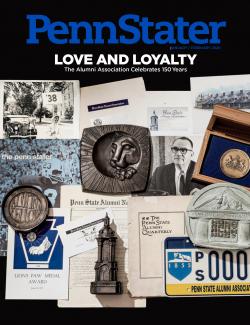
It is a truth universally acknowledged: Wherever a Penn Stater goes in this world, be it for work or for fun, they’re bound to run into another Penn Stater. From cathedrals in Paris to palaces in London, from pool halls in Connecticut to hotel lobbies in Florida, from Bavarian breweries to the grandeur of the Taj Mahal, we asked you to share your memories of unexpected encounters of the blue-and-white kind. Like any Penn Stater hearing a “We Are …,” you knew just how to answer.