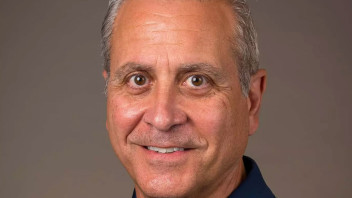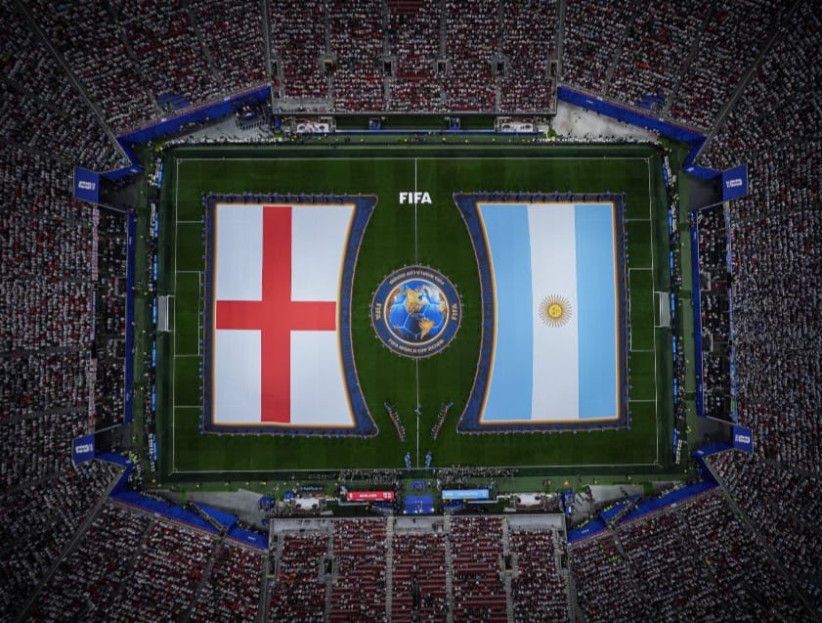
A 4-1 loss to Belgium in the round of 16 last month marked the end of the U.S. men’s World Cup dreams, but it wasn’t the last time this summer that Americans took the field on soccer’s biggest stage. Three Americans were on the pitch for the semifinal match between Argentina and England nine days later, and one of them was a Penn Stater. If you don’t remember anything in particular about the officiating in Argentina’s 2-1 victory, Corey Parker and his fellow referees will count that as a win.
Helping oversee a World Cup semifinal is the undeniable career highlight thus far for Parker ’08 Bus, a veteran assistant referee who works as part of a three-man team. It’s the culmination of nearly three decades of dedication for Parker, who balances his officiating—in addition to working international tournaments, he’s also one of the top assistant referees in Major League Soccer—with a family of four and a career as a principal at the accounting firm Baker Tilly. We spoke to him after the tournament about his path to the World Cup, how he balances his dual careers, and the best (and hardest) parts of the job.
PS: So how do you get to the point that you’re on the field officiating a World Cup semifinal?
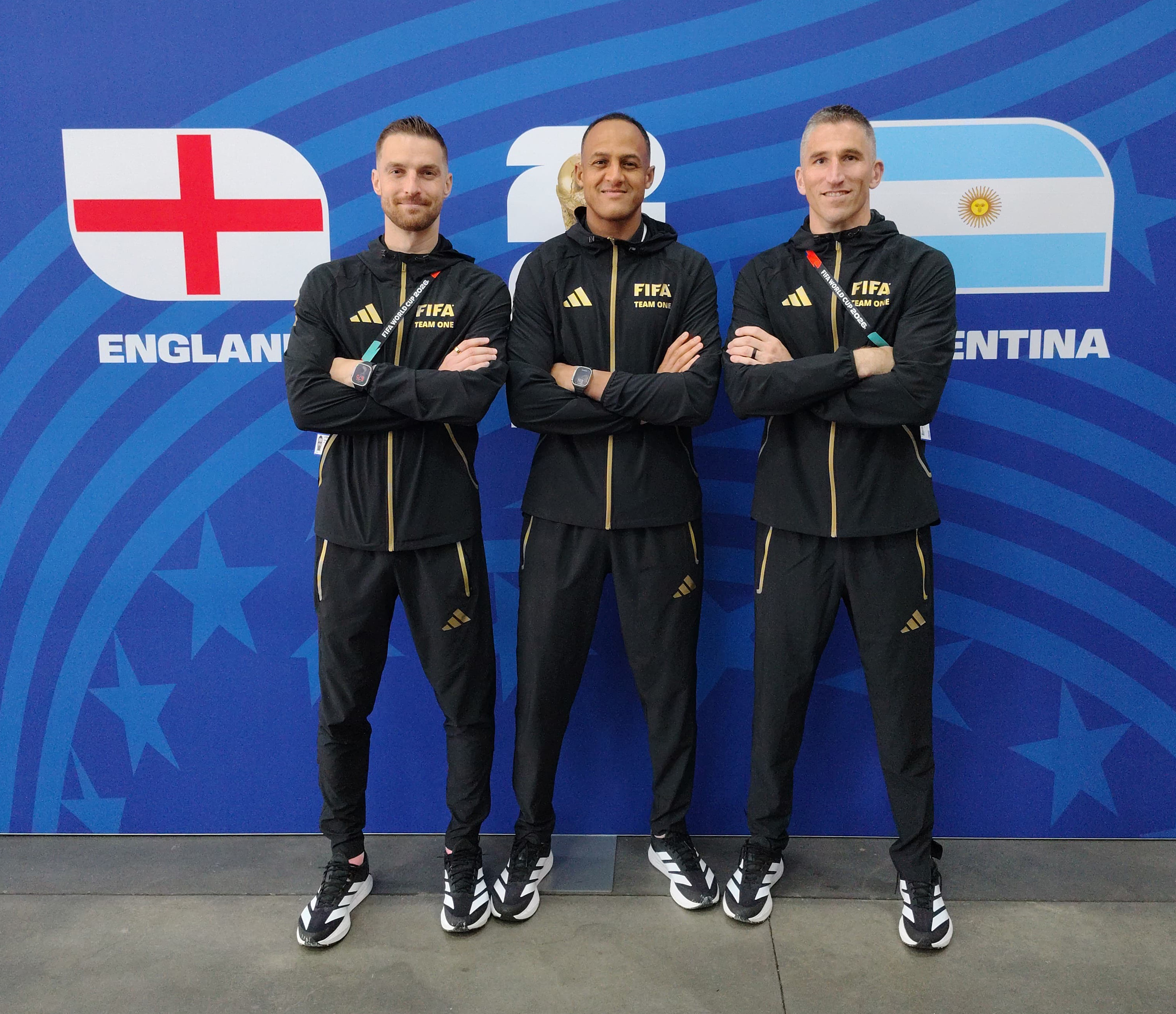
PARKER: Every World Cup is essentially a four-year cycle. I’m part of a trio: There’s a referee, Ismail Elfath, and another assistant referee, Kyle Atkins, and we’ve been together since 2019. We refereed the Under 20 World Cup in Poland in 2019, and actually refereed the final of that tournament. That essentially started a set of opportunities. So that was the first cycle we were in: We were at the Tokyo Olympics in 2021, and then we refereed three matches at the World Cup in Qatar in 2022.
Then you come into 2023 and a new cycle. We had a lot of experience, and our foundation was really strong. And you still have to maintain that performance, stay healthy, be ready. We found out in early April of this year that we had been invited to referee as a trio as part of this tournament.
Then we arrived in Miami on June 1, and all the referees were centralized in Miami for the duration of the tournament. We were there for 48 days from start to finish. There’s about a 10-day seminar for all the referees at the beginning, which is basically fitness training, technical training, so that everybody can get a solid foundation from a fitness perspective and hear all of the information and education that’s presented, with the goal of having consistent performances across all the matches. Then the tournament starts, and about three days before every match, they’d make the announcements for each match, and then we would travel one or two days before a game, depending on what city it was; if it was farther away—if you had to go to Vancouver, for example, or Mexico—some of those required more travel.
For the semifinal, we found out two days before. All of our colleagues are in essentially a hotel conference room. You’re in a big room with all of your peers, and the head of FIFA’s referee committee announces the appointments.
PS: And these appointments—this is not the folks in charge going, ‘Oh, I guess we’ll give it to these guys.’ You guys are getting rated and graded throughout, right?
PARKER: Exactly. Like I said, the overall process starts in that four-year cycle, really looking at every game you do along the way. And within that tournament specifically, every major decision is something that the referee teams look at. We do our self-evaluation. We get in front of a room of our peers, and look at certain plays and clips. Is there something you could have done better? Did you get the right result? And we’re trying to make sure that we learn from our experiences. And then every day, we get together with all the referee teams and debrief. So we’re looking at some critical decisions, themes from certain matches, things that can help us learn. It is a constant process of self-evaluation, taking feedback, and then taking that to our next matches.
PS: When you find out you’re doing the semifinal, is there any disappointment that it means you’re not going to do the final? Or is it, Hey, this is still a pretty incredible opportunity?
PARKER: Just being in consideration for a World Cup final is the coolest thing ever. But having the ability to put yourself in the conversation for those types of matches is incredible. You can’t expect to get there, but when it plays out that way, and it actually happens, it’s a really special feeling. All of the work, all of the sacrifice, all the trainings, all the time away from family, all of that stuff really came to fruition at that moment. There is so much history between those two teams, the two countries, the players … it really was a dream come true.
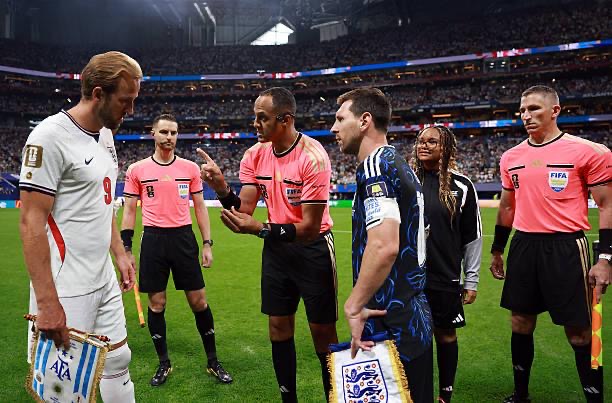
PS: England-Argentina featured Leo Messi, perhaps the greatest player of all time, along with a number of other players on both teams who are top players in the world’s best leagues. Have you reached a point in doing this where you’re past being starstruck, or are there still moments where you think, Oh, that’s Messi arguing with me about an offsides call.
PARKER: We’ve been lucky in the sense that we’ve experienced it so many times that, yes, it has become essentially normal. First and foremost, we’re fans of the game. But in real time, you are so focused. You’ve been trained to do this. So you’re sort of on autopilot. But the minute the whistle blows, you look around, players come to you, and you have a private moment and a conversation with really everybody on the field. That’s when it sort of hits, like, OK, these aren’t just world-class players. They’re also people. And so you make that emotional connection with somebody after such an important match, and it really is humbling to have those experiences. And then probably more important to me, my family can see that all happen. They get to be a part of it.
So it really was an emotional high. We stood on the field for probably 15 minutes after the game, just that chance to soak it in. All the fans were still in the stadium. You have a chance to have a quiet few moments with our referee team, with the players on the field, and I could look up and pick out my wife in the stands, and all the family that was there supporting us. That made it really special and memorable.
PS: I’m guessing your wife knows better than to identify herself as the wife of an official while the game is happening.
PARKER: Oh yeah. You gotta be careful. After the game, if there’s no controversy, then you can sort of humble brag a little bit.
PS: I want to get into your background. I assume you got into soccer playing as a kid, right?
PARKER: Yeah. I played every sport as a kid, probably wasn’t good enough to play at a high level, but I had a competitive passion for sports in general. I started refereeing when I was 13. I got a chance to do something cool, got paid to do it, and then as time unfolded, I get to travel? I get to experience the world? And the competitiveness of it all, that consistent challenge of, I want to be perfect. And every game is that new challenge. You’re always seeking that next opportunity.
PS: That continued through to your time at Penn State. Did you play club or IM soccer when you were here, or were you refereeing even while you were in school?
PARKER: I stopped playing soccer really young. I played other sports in high school, but when I got to college, I basically got my accounting degree, and I was essentially reffing the rest of the time. I would travel to youth tournaments on weekends. I would referee in college games at different locations. I would drive to Pittsburgh after finishing my classes, come back that same night after a game, or on a weekend, to do a college game, and then come back. So having two careers in college was very similar to what it is now, only it was soccer and school. And then I got into MLS two years after graduating; I was 24 at the time, and got into MLS in 2011. It was a really phenomenal opportunity.
PS: And in MLS, and now when you’re doing international matches, you’re always part of a team and you are always an assistant, right?
PARKER: Yes. Once you get to professional level, you specialize, so since I got into MLS, I have only been an assistant referee. With the video technology component, there are times where you might be in the video booth, but I don’t do a lot of that.
PS: What’s your favorite part of being on the pitch for those 90 minutes? What do you look most forward to about being on the field?
PARKER: I’ve kind of alluded to the second one, but the first one is the walkout. Prior to the walk-out, you get a chance to connect with the players, say hello. Getting a personal moment, a quiet word, and then you walk out on the field with them, and you get a chance to really be a fan for a moment. You hear the fans roaring. You get to be in some really cool stadiums, and that moment always hits really hard, which is just, I’m one of the luckiest people on the face of the Earth. I get to stand on the center circle at the beginning of a match with incredible players, incredible fans, incredible stadiums, and incredible moments like the World Cup. And then the other one is the moment the final whistle blows. You can take all that anxiety and all that stress and all that focus, and let it go. And you have a chance just to be thankful for having that experience. You know you did something that helped the game in that moment, and that’s what’s really cool.
PS: What’s the worst or hardest part of the job?
PARKER: I think this is something that a lot of fans would appreciate hearing: The worst part is, you make mistakes. And we know it. Now with the introduction of the video review, that helps us. That’s a tool to make sure that we’re getting the decisions right, helping the game, because nobody wants to make a mistake like that. But there are still less critical decisions that we make mistakes on. And the players oftentimes have a chance to have that one-on-one conversation, where you can say, Yeah, I missed that foul. I made a mistake. They make mistakes. They understand. And that humility goes a long way in building that relationship with that player.
PS: As an assistant, you’re primarily looking at offsides calls and fouls. What’s the toughest decision to make?
PARKER: Offsides are technically the hardest, right? With foul decisions, there’s oftentimes teamwork, communication. You can get a better angle. You can do different things to help put a puzzle together to make that decision. An offside decision, essentially, you are on your own. So you have to rely on your instincts, your point of view, your training. You see two players run in opposite directions; your brain can’t process a ball that’s here, a decision that’s here, and a player’s running at full speed. So you have to train yourself to anticipate, when the ball is going to be kicked, where do I look? How do I put my head in the right place? Your positioning obviously has to be perfect. That’s the one thing you do control. And then you put all those pieces together. That’s why it’s such an important part of the professionalization of refereeing. You’re standardized in one position, you benefit from that training, that education, that consistency, and you can make those decisions.
PS: When you come off the field after a match, are you more tired physically or mentally? I’m guessing the latter.
PARKER: Mentally, without a doubt. The best and worst part about the world we live in as professional referees is that we have access to the best fitness instructors, the best trainers, the education around health and nutrition. So we get support in every aspect that makes us ready to go out there and be prepared physically. The one thing you can’t control, or have less control around, is the mental aspect. In the World Cup you get a hydration break, and you get a halftime, but still, it’s absolute focus for 90 minutes plus. And so when you finish and you just get a chance to shut down, that’s why I said, I think the coolest moment is that sigh of relief after the whistle blows, standing in the field, because you finally have a chance to say, OK, I can be me again.
PS: You’ve got a full-time job, and of course this is a career on some level as well. Obviously doing MLS games on weekends isn’t the same as a World Cup that lasts almost two months, but still, how do you balance both?
PARKER: It is a constant challenge. I’m still not sure I can articulate exactly how it all worked. I found ways to make time, and support both goals. I want to achieve with my job. But I also want to referee the World Cup. And so I tried to make sure that no matter what I did, I was always working with both of those goals in mind. In most cases, I was lucky that soccer fit in my schedule as a consultant. I was able to work from hotel rooms, while I was traveling on airplanes.
At Baker Tilly, I have a fantastic team that has been very supportive. I actually started with the firm as an intern, and even as an intern, I remember I asked for a week off so I could go referee at the East Regional Championships, and they were like, “No problem.” They’re very supportive of, it’s your time. If you need it, make it work. Now, counter to that is, when I’ve gone to tournaments, I worked almost the entire tournament. So I didn’t take a month off to go to the World Cup; I was able to do both concurrently, sometimes to my detriment, probably. But again, to make sure I could be successful at both. I didn’t want to let my team down. And then I think over time, the evolution of our work environment, virtual tools, made it slightly easier.
PS: How many games will you actually work this year?
PARKER: Over the last 15-plus years, I’ve done somewhere between 20 and 30 games in a year. The league has grown, so it’s been more like 25 to 30 over the last couple of years, domestically. I think I’m at 330 regular season MLS games, and something like 32 MLS playoff games. I’m pretty lucky. I did MLS Cup in 2015 and 2020, and I was the Assistant Referee of the Year in 2015 and 2017.
And then there’s probably 10 to 15, maybe 20 international games across the full year. So it’s probably something like 40 to 50 soccer games a year, give or take. If I need a weekend off, I have the luxury; I can take time off with my family, take vacation. So there is flexibility.
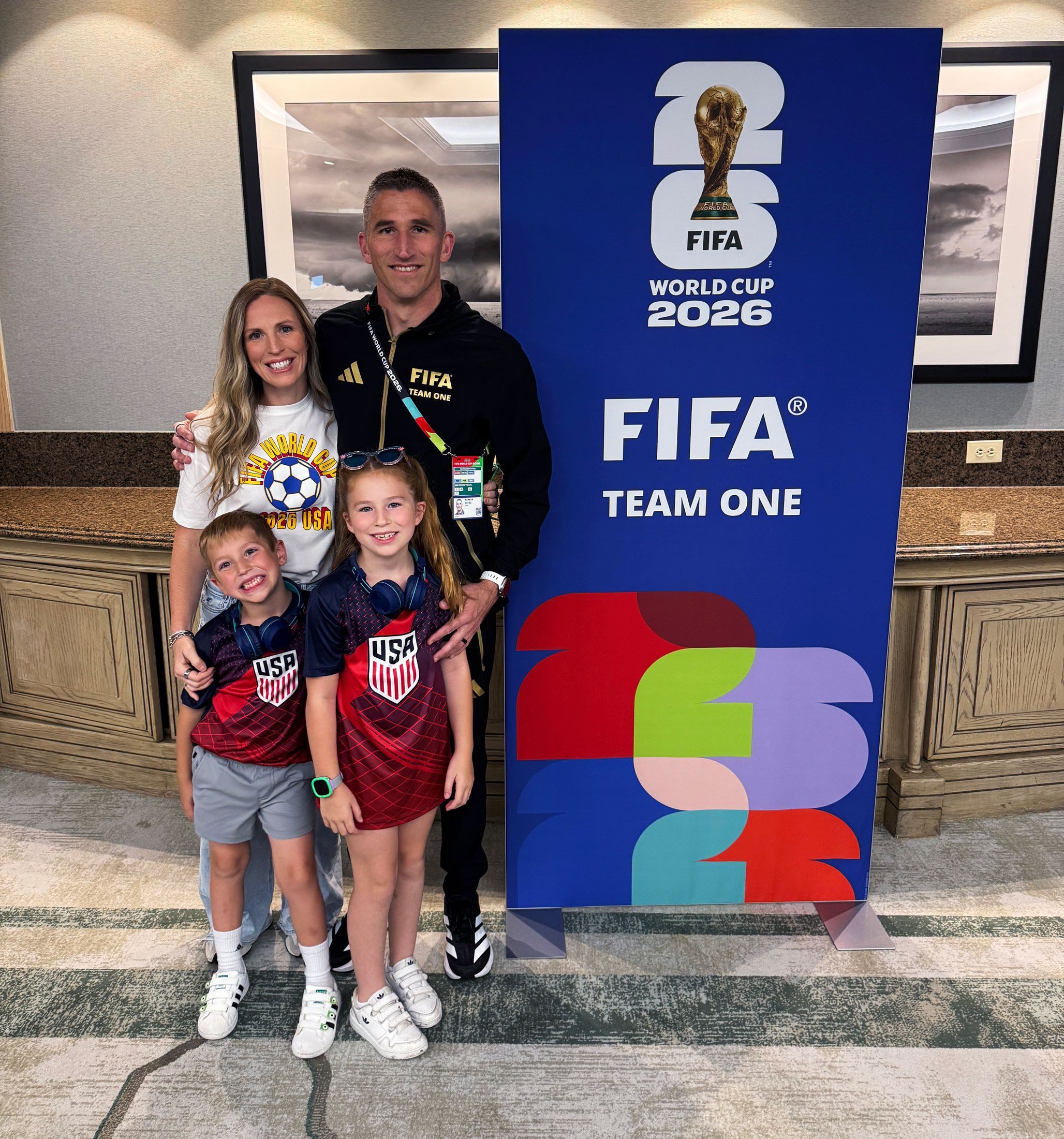
PS: You mentioned your wife was able to come to some of the games. Do you have kids?
PARKER: Yeah. I have an 8-year-old daughter and a 6-year-old son. Probably the coolest thing is they were able to come to two games. I didn’t expect that they would know what the World Cup meant, or that they would get tickets, but they were able to come to two of our four games. My wife came to all four. Having them along for the ride was just so special.