Taran Buie is explaining the origins of Boog. Boog is Buie’s newest nickname. It is short for Boogie, which is derived from Ron-Boogie, itself a more colorful update of Ron-Ron, which is the nickname Buie has gone by for as long as he can remember. His given name is pronounced tuh-RON, but “no one really calls me that,” Buie says. “I even feel funny saying it.”
Buie sits in a window booth at the Corner Room on a humid June (2010) morning, a half-eaten stack of blueberry pancakes slumped on a plate in front of him. His royal blue New York Mets cap sits on the edge of the table, giving his wiry black hair a chance to breathe. He’s here to talk about his family, which among other things means explaining the complex evolution of nicknames and volunteering to write down the names and ages and, yes, nicknames of each of his eight siblings.
One of those siblings is his 21-year-old half-brother, Talor Battle. It was Battle who came up with Boog although, in conversation, he tends to refer to his little brother as Ron-Ron. Battle goes by Bubby (we’ll get to that), but Buie just calls him T.
To an outsider, it is all very complicated, references of informality tangled up in family memories and inside jokes. For these young men, of course, it all makes sense. Their shared history is in those names, and that history—their family’s history—explains their bond, and their motivation.
Battle returns this fall for a final season with the Nittany Lion basketball team. A star senior who might have bolted for a long-shot chance at NBA riches, he’s back on campus to close out what might be the most impressive career in the history of the program. Buie, arguably the most highly touted recruit ever to sign with Penn State, joins him as a freshman. Battle is the straitlaced kid whose game is marked by determination and clutch shooting; Buie, three years younger, is a lithe and instinctive athlete who admits to a history of minor mischief-making off the court. Battle stresses that he and his brother are “totally different.”
But they are alike in their impetus—both harbor legitimate dreams of playing professional basketball and the life-changing income the game can provide. They are playing for their family’s future, for their mother and seven other siblings, and for the missed opportunities of their fathers. And this season, in spite of all the reasons it almost didn’t happen, they will play with, and for, each other.
Talor Battle was born in the fall of 1988, in Albany, N.Y., the third child of Denise Murphy and Lloyd Battle. Murphy worked as a railroad dispatcher in upstate New York, where she had moved from her hometown of Harrisburg, Pa. The marriage didn’t last, and not long after Talor was born, Murphy began a relationship with Dan Buie, a former basketball star at Harrisburg High School. They would stay together 18 years but never marry, struggling to maintain a relationship through Dan Buie’s legal troubles (including weapons charges and allegations of drug dealing) and moving their growing family from Harrisburg to Kansas and finally back to Albany as Dan Buie tried to resurrect his once-promising basketball career.
The couple had six children together, and Battle grew up with Dan Buie as the closest thing he had to a paternal presence—although one who often wasn’t around. Battle responded, almost instinctively, by taking on the role of father figure for himself: helping care for his younger siblings when they were ill or adding an authoritative male voice when they acted up.
“He’s a different kind of kid,” Murphy says. “Nobody ever put that pressure on him—he just took on that responsibility, and he still does. Bubby was always wise beyond his years.”

Battle’s nickname is borrowed from the former Pittsburgh Steeler quarterback Bubby Brister; his mother coined it and rarely calls him anything else. From a young age, Battle was a good and competitive athlete, and basketball quickly became his sport. In that, youngest sibling followed his lead. Taran Buie remembers tagging along as a middle schooler when Battle would play with the Albany City Rocks, a competitive traveling team that toured the national AAU circuit in the spring and summer. “I’d be the little bag boy, whatever,” Buie says. “I just wanted to be around.”
For both, basketball offered an escape from the harsh reality of life in Albany. Money was tight, Murphy was largely on her own with all those kids, and the clichés of urban existence—drugs, gangs, and the attendant violence—beckoned. (In 2009, Murphy’s oldest son, Tracy Battle, was sentenced to 70 months in prison after he pleaded guilty to charges of cocaine possession with intent to distribute; he was released to a halfway house in July, and he and his brothers remain close.)
Taran, three grades behind Talor, was a good enough athlete to stay on the court with the bigger kids. The experiences weren’t always fun, but they made Buie tough. “He just dragged me out there to get beat up,” Buie says. “We always got into fights with each other—not fistfights, but arguments. He’d call me ‘soft,’ and I’d tell him to shut up. I was always ready to really fight.”
All of this was fairly typical from Battle and Buie, whose opposing personalities their mother describes in diplomatic terms. “Talor tries to avoid any kind of confrontation,” she says. “Taran is more ... energetic. He’s definitely a risk taker.”
Battle is more blunt. “RonRon is a little rough around the edges,” Battle says. “You couldn’t tell him nothin’. I stayed out of trouble, and he was always in it.”
Buie describes himself as an instigator of mostly innocent trouble, the kid who was “always roughhousing, always wanted to be the class clown, always wanted to do something stupid when the teacher turned her head.” He says most of his childhood friends eventually joined gangs; with basketball providing a buffer, gang life was a temptation he managed to avoid.
In person, Buie is talkative and engaging, making eye contact throughout our conversation; he’s a charmer who admits with a laugh that “T was kinda the angel; I was the darkness child.” The constant comparisons to his do-no-wrong older brother didn’t help Buie straighten up. It was only on the basketball court that he could live up to Battle’s example—if not surpass it.
That took some doing. By the end of his sophomore year at Albany’s Bishop Maginn High School, Talor Battle was considered one of the top 100 players nationally in the class of 2007, and big-time college coaches had taken notice. Then he suffered a severe ankle injury, and many of those coaches moved on to other prospects. Penn State coach Ed DeChellis ’82 Edu didn’t waver, keeping the school’s scholarship offer on the table. When Battle returned healthy and earned all-state honors as a senior, some of those same big-time coaches renewed their interest. Battle rebuffed them and rewarded DeChellis’ loyalty by reconfirming his commitment to Penn State.
Buie was a freshman during Battle’s senior season in high school, coming off the bench as his big brother led the team to the state title game. Over the next two seasons at Bishop Maginn, Buie developed into a star of his own—as a sophomore in 2008, he led the team to the Class AA New York state championship—and many of those same big-time coaches came calling. By his junior season in high school, Buie was ranked as a top-75 prospect nationally, and Maryland and Notre Dame had emerged as his favorites. Both claim more impressive basketball reputations than Penn State, and Buie admits that the Nittany Lions were “probably No. 3 on my list.”
While Buie was trying to figure out his future, Battle was becoming a folk hero in Happy Valley. After a strong freshman season—he started all but Penn State’s first game and led the team in points and assists—Battle blossomed as a sophomore, earning first-team all-Big Ten honors and leading the Lions to a school record 27 wins and the 2009 National Invitational Tournament championship. Buie watched his big brother lead the Lions on that inspiring run to the NIT final in New York City, and he was courtside in Madison Square Garden when the Nittany Lions cut down the nets. By then, Buie had shuffled his mental list.
“I knew before that game—I was just waiting to announce it,” Buie says of his college choice. “Then I just asked myself, ‘What am I waiting for?’” The brothers were on the sidewalk in midtown Manhattan, getting food before their long rides home, when Buie looked at his older brother and said, “Man, I’m ready.”
His future teammates were waiting on the team bus idling nearby. “I just walked up on the bus, shook Coach D’s hand, and said, ‘I’m ready to be a Nittany Lion.’ The whole bus kinda exploded. They had no idea.”
It might’ve been the brightest night in Penn State basketball history: A first-ever national postseason title—one that mostly negated the Nittany Lions’ pain at just missing out on an NCAA tournament berth—followed by a commitment from the sort of recruit who could help make such success the rule rather than the exception.
It felt like something out of a movie. But the next 12 months would not follow the script.
The summer that followed was an eventful one for Denise Murphy’s family, and particularly for her basketball-playing sons. Talor Battle traveled to Serbia for the World University Games and led a talented U.S. squad in scoring. He returned to Happy Valley as a preseason favorite for Big Ten Player of the Year honors. His local fan base got a boost, too: Not long after Buie committed, he, his mother, and five of his siblings relocated five hours south to Boalsburg, a long three-pointer from University Park. Buie enrolled at State College High School for his senior year. The move was an eye-opener for the family. “In Albany, we were right in the city, and the last place we stayed was horrendous,” Murphy says. “Our first weekend in Pennsylvania, we went out and picked berries.”
'Food even tastes better here,' Buie says. 'I picked up an apple at the Nittany Lion Inn, and I swear it was the best apple I ever tasted.'
It might’ve been the fresh fruit or the fresh air, or maybe just the passage of time, but Murphy and Battle both say Buie has matured noticeably in the past year. “That attitude he had just isn’t there anymore,” Battle says. “We had a little heart-to-heart this summer, and it was the first time I heard him say that he realizes everything he was doing was wrong. It was funny to hear him admit it. We used to tell him all the time.”
(Buie is still figuring it out: In July, early on the Sunday morning of Arts Fest weekend, Buie was cited by State College police for disorderly conduct; athletic department officials portrayed the incident as little more than overzealous horseplay with a friend, and at press time, neither the basketball program nor the University’s Office of Judicial Affairs were expected to take any action.)
For Murphy and her younger kids, being able to see Battle on an almost daily basis has been a gift. The feeling is mutual. Battle has had some of his best games on days when his family showed up unannounced at the Bryce Jordan Center. He’s the one his youngest sisters clamor to call on Father’s Day, the one even Buie refers to as a father figure. “Everybody gravitates to him,” Murphy says. “The house comes alive when Bubby comes home, and it has nothing to do with basketball.”
It seemed perfect: the family together, Battle inspired by their presence, Buie given a year to acclimate to central Pennsylvania and his future teammates while still in high school. It worked out well enough for Buie. The instant popularity brought by his athletic reputation meant he made the State High homecoming court before he knew most of his classmates’ names, and while he missed his friends in Albany, he knows the move was in his best interests. “Sometimes my friends come down to visit,” Buie says, “and they tell me they wish they could move down here.”
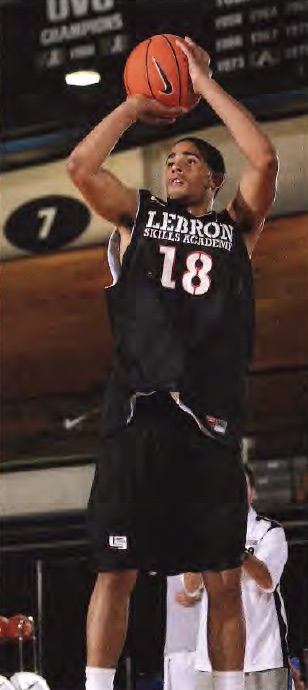
As a 6-foot-2 senior last year, Buie earned second-team all-state honors for a State High team that lost in the district title game. It was a decent if somewhat disappointing season, but nothing like what his big brother endured. As a junior last season, Battle led the Nittany Lions in points, assists, steals, and rebounds, making him the only Division I player in the nation to top his team in the major statistical categories. It was at once a terrific individual feat and a reminder that Battle simply didn’t have enough help; 5-foot-11 guards, no matter how good they are, should not lead their teams in rebounding. Penn State finished 11-20, and as one ESPN writer observed last winter, “Talor Battle might be the closest thing in the nation to a one-man gang.”
It was incredibly frustrating, though Battle rarely let it show, publicly reiterating his support for his teammates and DeChellis whenever asked. But the happiest hours he spent in a gym last season might’ve come when he was cheering on his little brother from the stands at State High. One on particular Saturday last winter, Battle sat in the high school bleachers, doted on by his little sisters and surrounded by his mother and the more than 65 family members and friends who had come in from Harrisburg and Albany for the weekend. He wasn’t on the court, but he couldn’t have looked happier.
Last April, a month after the end of that discouraging junior season, Battle submitted his name for entry into the 2010 NBA draft. The move gave him the chance to work out for pro scouts without losing his final year of collegiate eligibility, as long as he pulled his name out of the hat by the NCAA-mandated date of May 8. Dozens of top college players test the waters this way each spring, hoping to impress NBA execs into promising them a spot in the draft while leaving themselves the chance to go back to school. Battle worked out for scouts from the Portland Trail Blazers, got feedback from more than a dozen other teams, and heard nary a promise from any of them.
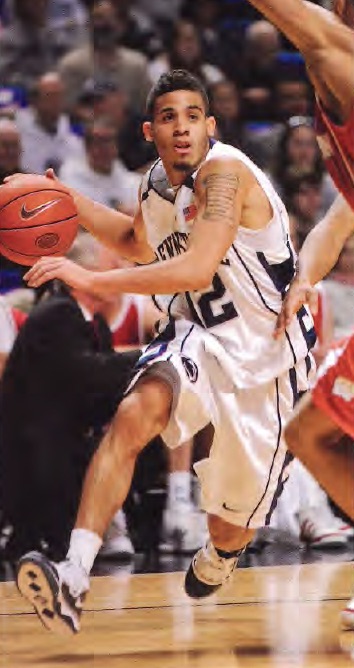
“In the end, it was easy,” Battle says of his decision to return to school. “Not having a clue if I’d get drafted, the chance to lead my team and play with my brother—it was as simple as that.”
The family had talked about it, of course, Buie urging his older brother to leave if given the chance, and Murphy standing behind whatever decision her son made.
Had Battle left early, Buie admits he might’ve left, too—Maryland or Notre Dame or some such program would’ve found room for him, and playing for a struggling Penn State program without his brother didn’t seem all that enticing. “I thought about rethinking it,” Buie says. “But the more I thought about it, it was like, Penn State is home. I was comfortable here.”
Buie adds he was “ecstatic” when his brother decided to stay in school, but that ecstasy was tempered by the knowledge that Battle won’t be an NBA lock next year, either. Battle’s height is the biggest knock on his game, a literal shortcoming that no amount of hard work can alter: “I can’t sit here and hope I grow four inches,” Battle says. The scouts’ assessment isn’t without hope. Battle was one of 20 college players invited this summer to the LeBron James Skills Academy, a showcase camp for top college and high school talent. (Buie was one of the 80 prep players invited in 2009.) The invite is selective, confirmation of the college players’ high standing among NBA scouts, dozens of whom come to Akron, Ohio, to watch. I asked one of them what more Battle could do to get on scouts’ radar.
“He’s already on our radar,” the scout replied. “I don’t know what he could do that he’s not already doing.”
Figuring that out before next year’s draft is Battle’s primary motivation. He’s concentrating on improving his defense, where he sometimes appears laissez-faire; by contrast, defense might be Buie’s strongest suit. Theirs have always been complementary personalities, and so it is with their games. It’s in the best interests of all Penn State hoop fans that they complement each other this season, when so much is at stake—not least the program itself, which, if not a sinking ship after last season’s showing, certainly seems to be taking on water: The Nittany Lions last made the NCAA tournament in 2001.
Battle and Buie are unquestionably their team’s most talented players, but Buie says he understands that as a freshman, he has yet to earn a minute of playing time. His mom has no doubt that he’ll make the effort.
“Because Talor’s there, Taran has to work hard,” Murphy says. “I know the coaches make them work hard, but in Taran’s eyes, it would be more of a failure to disappoint Bubby.”
Buie’s deference is such that he won’t even admit to being able to beat his brother one-on-one. Well, not quite.
“He’ll still win every time we play,” Buie says, smiling. “I mean, I might get him. But I ain’t going on the record with that.”
This is relayed to Battle, who says there is no “might” involved. “He can’t beat me one-on-one,” Battle says. “Only way you’re beating me one-on-one is if you’re bigger than me—I mean, like, 6-9.”
Buie has done pretty well in his brother’s shadow. One more year in the shade shouldn’t be a problem.